A Designer's Take on the Chick or Treat Embroidery Design
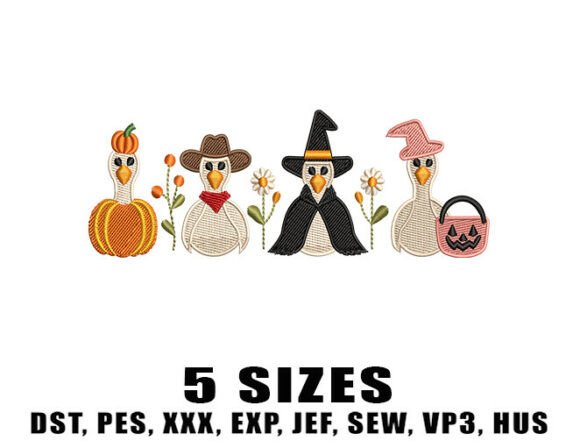
Opening a new embroidery file always brings a moment of anticipation. What’s the mood? What’s the potential? When I first looked at the Chick or Treat design, my immediate reaction was a smile. This isn’t just another Halloween motif; it’s a playful, character-driven scene. The concept of geese dressed in pumpkin, cowboy, and witch outfits creates a specific kind of charm. It’s festive without being spooky, adorable without being childish. From a designer's perspective, that’s a valuable niche. It speaks to a mood of cozy, whimsical autumn rather than just pure fright night, which broadens its appeal considerably.
The Immediate Project Fit: Where This Design Naturally Lands
Before even loading it into the machine, I start visualizing the finished stitch-out. The layout feels balanced, with enough detail in the costumes to be interesting but not so dense that it becomes a stitching headache. The personalities of the geese are distinct. This tells me it’s perfect for items where the embroidery itself is the star—a central, statement decoration.
My mind goes straight to a custom embroidered tote bag or a cozy sweatshirt. These geese have a boutique-friendly vibe. They’d look fantastic on a tea towel for a kitchen display or as the focal point on a pillow cover for a seasonal living room refresh. For small business owners, especially those targeting handmade holiday markets, this design is a ready-made product idea. Think of an Etsy listing for a "Chick or Treat" baby blanket or a set of embroidered aprons for a fall-themed gift box. The design’s inherent giftability is high; it feels personal and special.
Navigating the Practical Stitch-Out
When evaluating any embroidery design for real project use, the theoretical charm needs to survive the practical embroidery process. Here’s my thinking for this one.
The provided size range—from approximately 3.8 inches to 6 inches—is sensible. The smallest size is perfect for a cap or a baby item sleeve. However, at that smaller scale, you must be mindful. The costume details, like the witch hat or pumpkin ridges, will need clean stitching. I’d advise testing the 3.8-inch version on scrap fabric first to check the clarity of those smaller elements. For the larger sizes, on a tote or sweatshirt, the design will really shine, allowing the fill stitches in the costumes to look lush.
Thread color choice is crucial here. The design relies on the contrast between the geese and their outfits. Using a bright, clean white or cream for the geese bodies against the pumpkin orange, cowboy brown, or witch black will make all the difference. On dark fabric backgrounds, you’ll need a strong stabilizer and potentially consider a slightly higher stitch density for the lighter colors to ensure they pop and don’t get lost in the fabric texture.
Considerations for Specific Products and Fabrics
As a professional, I always match the design to the product’s function. This Chick or Treat design, with its cohesive group of characters, works beautifully on flat, stable surfaces like bags, pillow covers, and towels. On stretchy fabrics like t-shirts, be extra diligent with your stabilizer choice to prevent puckering around the denser costume areas. For curved surfaces like caps, the mid-range sizes (like the 4.8 or 5.8 inch) would likely adapt best, avoiding the extreme top or bottom curvature of the cap.
One of the strongest commercial uses I see is for creating embroidered patches. This design, stitched out on a sturdy fabric with a good border, could become a fantastic standalone patch for jackets or bags. It has the visual weight and completeness to work as an independent product.
Areas for careful attention? The tiny details within the costumes at the smallest hoop size, as mentioned. Also, if you’re planning products that will undergo frequent washing, like baby clothes or kitchen linens, ensure you’re using high-quality thread and a secure stitching technique so those adorable details stay intact over time. This protects both your finished product’s longevity and your customer’s trust.
Why This Design Adds Value for Craft Businesses
Beyond the stitch-out, a design like this affects your business on several levels. For creative entrepreneurs, it offers immediate seasonal relevance without being a generic pumpkin or ghost. That helps with brand consistency if your shop has a playful, handmade aesthetic. It’s a design that encourages personalization—you could easily add a name above the geese for a custom gift.
The visual appeal is high, which drives buyer engagement in online listings. A well-stitched sample of this on a product makes for excellent photography and printable mockups for your digital product listings if you’re selling the design file itself. It looks professional and finished, which is key for converting browsers into buyers.
For apparel decorators, it fills a gap in the Halloween market. It’s suitable for all ages, which expands your customer base. A teen might love it on a sweatshirt, a parent on a baby’s bib, and a grandparent on a decorative pillow. That versatility is a practical asset.
Final Designer Notes Before You Hoop Your Fabric
My review always ends with a checklist of action items. For the Chick or Treat embroidery design, here’s what I’d do.
- Test the size you intend to use on a scrap of your final project fabric. Check the stitch density and detail clarity.
- Review your thread palette against your fabric color. Do a quick black-and-white mockup in your software to check contrast levels if you’re unsure.
- Confirm the licensing terms of the design. Before selling finished items or commercial products, ensure your use is permitted.
- Plan your stabilizer strategy based on your fabric’s texture and stretch.
- Think through your product line. Does this design work as a single feature, or would it pair well with simpler, text-based designs for a product collection?
The Chick or Treat design is more than a file; it’s a project catalyst. It has the character and quality to translate into a finished product that feels thoughtful and well-made. Whether you’re stitching one for a gift or a hundred for your craft business, it’s a design that, with careful execution, will deliver that satisfying result where the digital idea becomes a tangible, charming piece of handmade art. That’s the ultimate goal for any embroidery designer.