Respect the Vest: A Designer's Review for Craft Fair Products
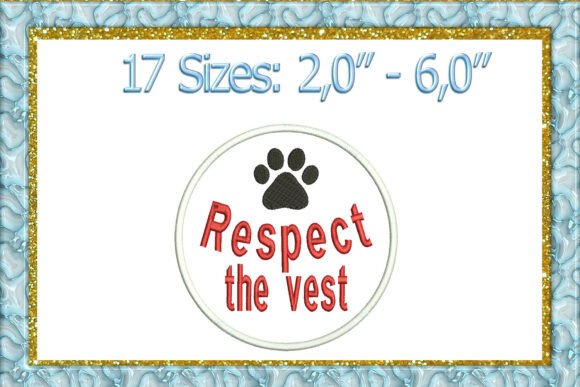
As an embroidery designer preparing for a weekend craft fair, every design in your library gets a critical eye. You're looking for files that not only look good on screen but translate into sellable, beautiful, and practical products on your booth table. Today, I'm reviewing the Respect the Vest Applique Embroidery design. This is a real-world assessment focused on what sells, what looks good stitched out, and where it fits in a display filled with totes, aprons, patches, and more.
First Impression: Bold Advocacy for Service Animals
The immediate feeling from the title and description is bold and declarative. It’s not a cute, whimsical dog design; it’s a statement. "Respect the Vest" speaks directly to supporting service animals, and the design likely embodies that with clear, impactful lettering and symbols. For a craft fair, this creates a very specific niche appeal. It feels modern, direct, and carries a premium sense of purpose. Customers who care about this cause will notice it instantly.
Where This Design Shines in Your Booth Display
Your table has a mix: tote bags, aprons, tea towels, caps, small pouches, pillow covers. Not every design works on every product. For Respect the Vest Applique Embroidery, you need to think about visibility and context.
- Tote Bags & Market Bags: Excellent choice. A bold statement on a bag makes it a functional advocate piece. It becomes more than a bag; it’s a wearable message.
- Aprons: Could work well on a chest pocket or lower corner, especially for animal professionals or passionate advocates in kitchen settings.
- Caps: A strong option. A service dog handler or supporter might appreciate this on a cap. Be mindful of the curved surface; ensure the design adapts well.
- Embroidered Patches: This is a prime candidate. A "Respect the Vest" patch can be ironed or sewn onto a service dog vest bag, a jacket, or a backpack. It’s a direct, impactful product.
- Pillow Covers & Tea Towels: Less obvious, but in a home that deeply supports this cause, a decorative pillow or towel could be a unique, heartfelt gift.
The key is positioning. Don’t scatter it everywhere. Cluster products featuring this design together to tell a story in your booth. It creates a dedicated "advocacy corner" that draws a specific customer.
Practical Production: Stitching It Out for Sale
Turning a digital embroidery file into a reliable, batch-produced craft fair product requires a hands-on review. Based on the description mentioning "bold emb," here are my practical notes.
Design Scale and Clarity
This design likely relies on clear lettering ("Respect the Vest") and possibly symbolic elements. Test it at different sizes.
- Will small lettering remain legible on a patch or cap?
- Does it work as a large focal point on a tote bag? Check stitch density—very dense areas on thick fabric like canvas can be challenging.
- How does it look on textured fabrics like tea towels? Details can get lost.
For online sales like Etsy listings, bold designs photograph well. Ensure you stitch a sample on both light and dark fabric to showcase contrast in your listing photos. A real mockup is essential.
Batch Production and Efficiency
For a craft fair, you might need a dozen totes or patches. Is this design repeatable?
- Review the stitch count and estimated time. Complex appliqué or many color changes can slow batch production.
- Confirm the standard hoop size required. Can you use a common hoop you already have for multiple products?
- Thread colors: Are they common, easy-to-stock colors? Limited, specific colors can complicate batch work.
Always use the right stabilizer for each fabric type. A patch on sturdy twill needs one approach; a tote bag on canvas needs another. A failed, puckered sample means a lost sale.
Commercial Licensing Check
The description mentions it's a digital file for machine embroidery. Before selling any finished products, you must absolutely confirm the commercial licensing terms. Some digital files are for personal use only. As an embroidery business owner or Etsy seller, your responsibility is to verify this. Never assume.
Customer Engagement and Booth Impact
A design like Respect the Vest Applique Embroidery does more than decorate a product; it engages a conversation.
- Visual Appeal & Attention: It stands out for its message, not just its aesthetics. In a busy craft fair, it will catch the eye of people connected to service animals.
- Product Value & Quality: Well-executed on a premium product (like a sturdy tote), it feels valuable and purposeful, increasing perceived worth.
- Brand Consistency: If your handmade shop leans toward advocacy, community, or animal themes, this strengthens your brand. If your style is purely decorative, it might be a standout one-off.
- Buyer Engagement: It invites questions and stories. Be prepared to talk respectfully about service animals. This connection can turn a browse into a sale.
Final Designer's Checklist Before the Fair
Before you commit this design to your production schedule, run this quick list:
- Stitch a test sample on scrap fabric that mimics your intended product fabric (canvas, cotton, twill).
- Check thread contrast for both light and dark backgrounds.
- Review spacing and layout—does it feel balanced on the product?
- Inspect stitch density on the heaviest fabric you'll use to avoid puckering.
- Create at least one finished real mockup product (a tote, a patch) for your booth display and photos.
- Compare how it looks on a few fabric colors to offer variety.
- Confirm, in writing, the commercial licensing for selling finished products.
Respect the Vest Applique Embroidery has clear, bold potential for craft fair sellers targeting a passionate niche. Its success hinges on practical execution: placing it on the right products, ensuring production quality, and presenting it with context in your booth. For the right customer, it won’t just be another embroidery design; it will be a statement they want to carry and support.